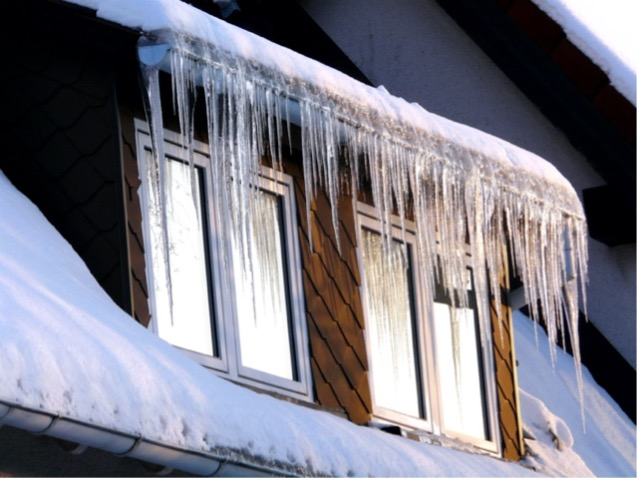
- Clean out gutters. Gutters with excess debris can reduce water flow increasing chances of ice build-up, weighing gutters and causing them to pull away from the roof.
- Trim branches that may be close to your house as ice may weigh these down causing them to break and damage your home.
- Check your doors and windows. Gaps around window frames and doors can allow cold air to leak inside, so make sure the weatherstripping is secure. If not, replace or use self-sticking weatherstripping and draft guards.
- Protect your water lines. Ensure insulation around lines is still in good repair, close crawl space vents, remove water hoses from outside spickets and store for the winter.
- Consider purchasing a programmable thermostat if you haven’t already. In the winter, a programmable thermostat allows you to save money on your energy bills by setting it to a desired temperature that self regulates.
- Clean or change filters in your heating and air system. Dirty filters reduce air flow which can reduce the energy efficiency of the unit.
- Check your refrigerator. The optimal refrigerator setting for food safety and energy efficiency is 36-38 degrees F. You should also keep the freezer at 0 to 5 degrees F. Setting your appliances any colder than this wastes energy. Check the rubber door gasket on both the refrigerator and freezer to ensure a tight seal.
- Reverse your ceiling fan. Ceiling fans are a popular appliance in the summer months but can also help with energy efficiency in the winter. Warm air rises. By reversing your ceiling fan, it can help push warm air down which will help with constant temperature control.
- Check insulation in attic floors and ceilings to ensure it is still secure.
- Prepare for prolonged power outages by keeping extra batteries, flashlights, weather radio, blankets, canned foods and bottled water. In the event a forecasted storm is predicted to knock out power, you may want to fill sinks and tubs with water for personal care and to flush toilets.
Healthy Homes