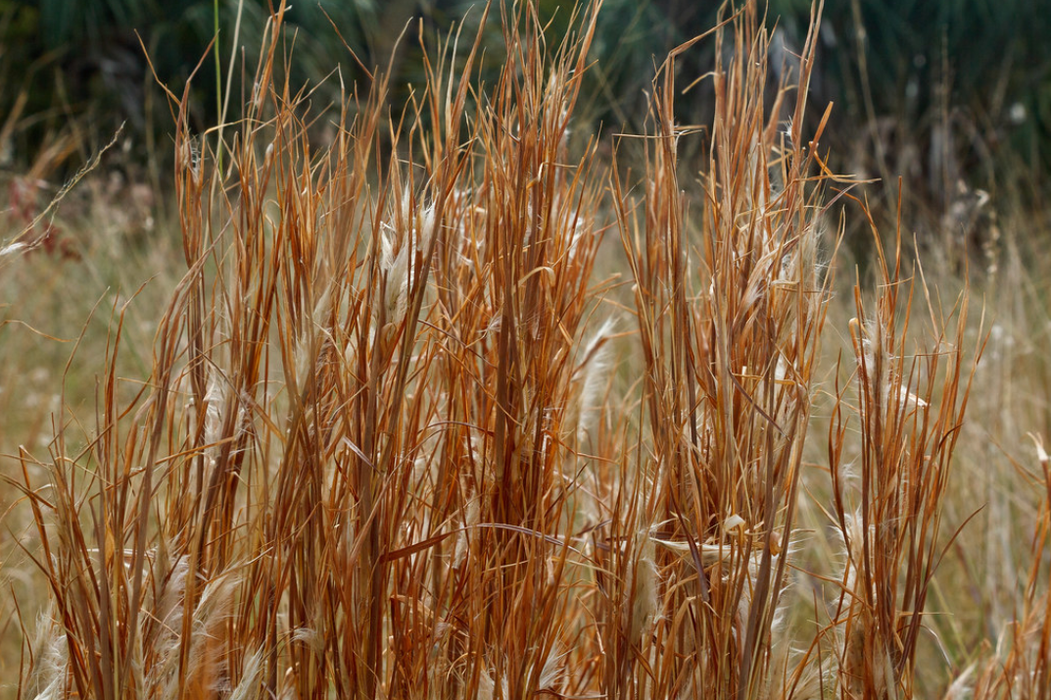
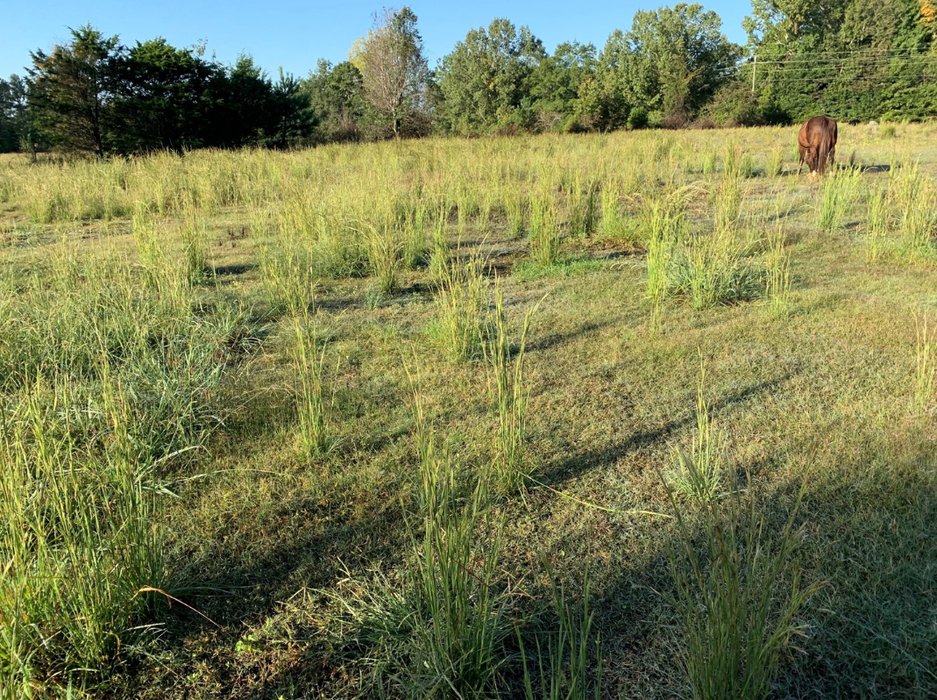
Broomsedge (Andropogon Virginius) is a native warm-season perennial bunchgrass commonly found in pastures, hayfields, and roadsides throughout the southeastern United States. While it has some historical significance and ecological value, it is often considered a sign of poor pasture health and presents several challenges in livestock operations.
Historically, broomsedge was not intentionally planted but became a dominant species in overgrazed or nutrient-depleted fields. As a native species, it once played a role in early successional plant communities and provided cover for small wildlife. The name "broomsedge" comes from its former use in making homemade brooms - bundles of dried stems were tied together to form the bristles for sweeping floors.
Over time, the plant gained a reputation as a "poverty grass," signaling poor soil conditions and mismanaged forage systems. Its spread increased with changes in land use, including repeated cultivation, farmland abandonment, and chronic overgrazing.
Although broomsedge is not toxic, it offers little to no value in terms of forage quality. Livestock generally avoid grazing it, especially once it matures. It’s coarse and unpalatable, with crude protein levels often below 6% and digestibility well under 40% in mature stands. As it becomes established, it outcompetes nutrient-rich species such as fescue, orchard grass, and clovers, leading to reduced forage productivity. Its presence typically indicates low soil fertility - particularly low phosphorus (P), potassium (K), and pH - along with poor pasture management practices like overgrazing and the absence of rotational grazing. Pastures dominated by broomsedge provide less usable forage, which lowers stocking rates and increases feed costs.
Unfortunately, no selective herbicides are currently available for controlling broomsedge in established perennial pastures. Management relies primarily on improving soil fertility and grazing practices. Conducting a soil test, currently free through our office, can help identify pH levels and nutrient deficiencies. Broomsedge thrives in acidic soils (pH below 5.5), so raising the pH to a range of 6.0–6.5 promotes the growth of more competitive forage grasses. Applying phosphorus and potassium based on soil test recommendations also improves overall soil fertility.