by: Eleanor Moyer, Master Gardener Volunteer
Discovery Garden
(Updated: July 28, 2025, 11:25 a.m.)
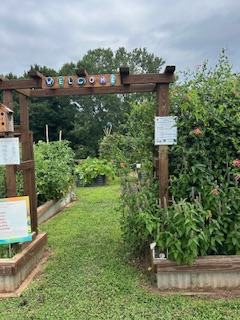
My daughter delights in our Hayesville library’s used book store which her family supports each time they visit. This week she found glossy, elegant decorating magazines for inspiration in her remodeling project. She would have spent over $40 if new. These were $2.50 and packed with ideas. Now that summer is in full swing, I invite you to stroll through the Master Gardener Discovery Garden just down the hill from the library for even more inspiration at an even lower cost—free!
We’ve all been fortunate with adequate rain and bountiful sunshine, so gardens are doing pretty well for the most part. This then is an excellent time to plan for the future which the discovery garden provides. Nancy Dutcher and Jeff King and their fellow Master Gardeners have rolled out yet another garden gem chock full of flowers, veggies and some new techniques.
I have always loved the zany, screwball comedy “Arsenic Old Lace” starring Cary Grant in which his maiden aunts do-in elderly bachelors with poison in their elderberry wine, so I thought now that I’m an old lady perhaps I might like to make some wine myself (minus the poison). I was happy to discover elderberry growing in the Discovery Garden. This native is beloved by birds and pollinators, fruits one to two years after planting, and is useful in culinary and medicinal concoctions. It’s one thing to read about its growing habits and another to actually see it. This is one large plant-growing 10 to 12 feet high and 5 to 10 feet wide! It prefers full sun and consistent moisture. It does sucker easily, but they are easily removed. The fruit must not be eaten raw, but cooked down to create syrups, jellies, and cold remedies. The flowers can also be battered and fried or made into a liqueur (think St. Germain).
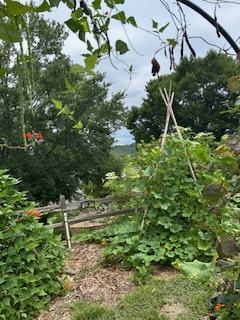
This is the first year volunteers have grown squash and beans on a teepee trellis. In your own gardens this might be a play space for children and grandchildren as well as sparking interest in native living habits, gardening, and healthy eating. The monarch butterfly way station and pollinator garden is also in full bloom. There are many flowers that attract pollinators, but milkweed is the only food monarch caterpillars can eat and upon which they lay eggs. Milkweed plants require full sun and well-drained soil with adequate moisture. They have deep roots and can grow quite tall. The Discovery garden is a good place to see this butterfly magnet in action.
Volunteer, Jeff King, has proceeded to experiment with creating a meadow, the current darling of the plant world. He purchased seed designed for the purpose, prepared the soil, and voila, a meadow has emerged. He will mow it down in spring to see how it develops next year. This might be a perfect answer to how gardens are supposed to be especially if you want less turf to feed, water, cut and repeat each week for months. It surprised me with its variety of color and texture.
There are many other delights to catch your eye—come see for yourselves!
Join our mailing list!
Enter your email address to receive updates.
Written By