By: Eleanor Moyer, Extension Master Gardener℠ Volunteer of Clay County
I know you thought that gardening was over, but November into December is a great time to plant spring bulbs. It is necessary to wait until now, as they are like tiny brown bears needing their winter siesta before emerging into the glories of spring. The good news is—it couldn’t be easier! All the nourishment to flourish is already tucked into their anatomy. Most bulbs have a roundish shape with a flat end and a pointy end. They are placed in the ground pointy end up, but even if you get this wrong, most will right themselves. They like loamy to sandy soil-in other words, good drainage. The depth for planting varies, but a good rule of thumb is two to three times the height of the bulb.
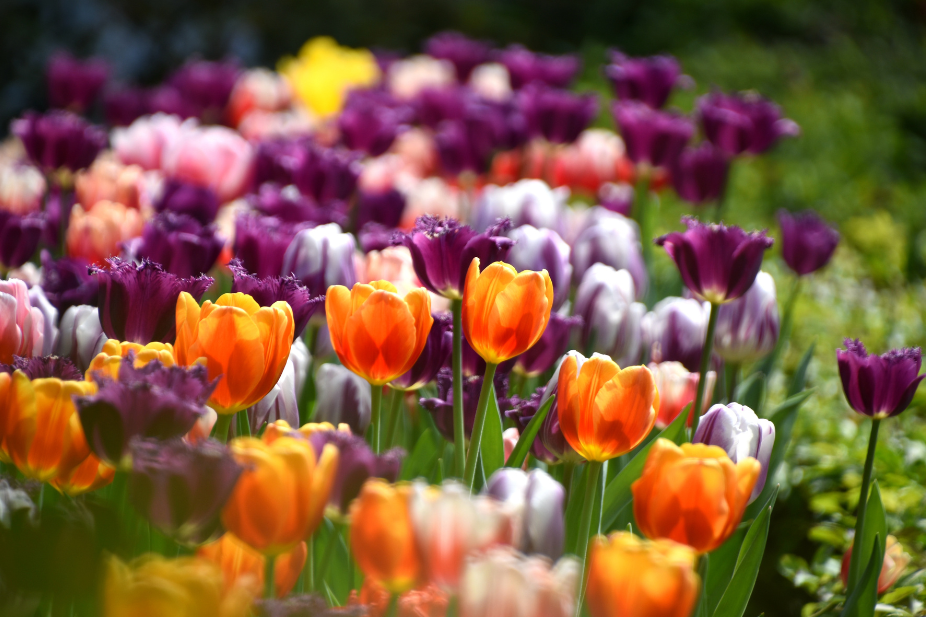
Tulips come in many colors and can be a great addition to a spring garden
Tulips like to be planted deeper, so maybe three to four times the height. There are bulb planters available, but a garden spade is sufficient. Even better is an auger that attaches to your power drill, which would make it super easy to dig holes, especially around existing plants. They prefer full sun (six to eight hours).
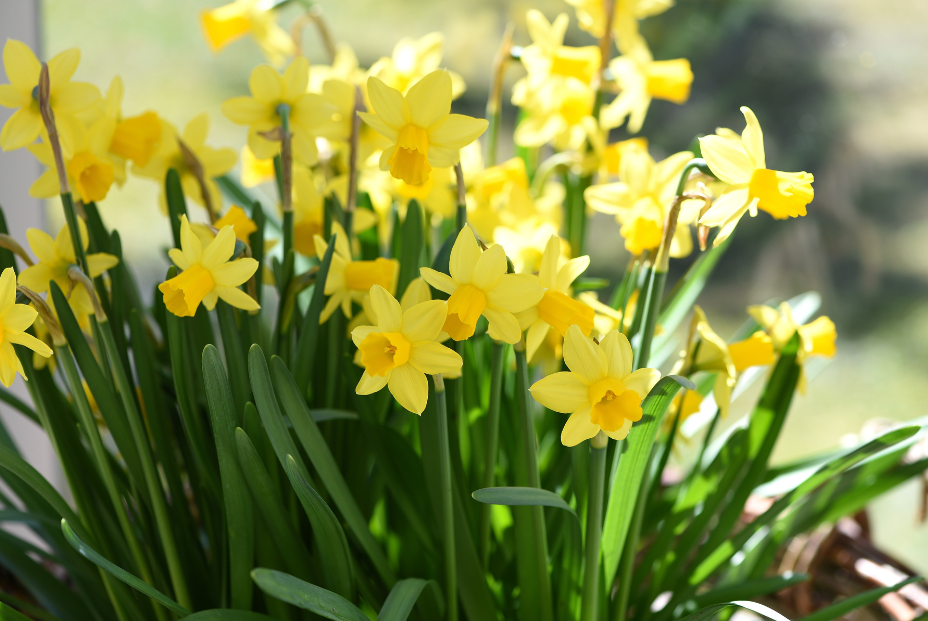
But consider that early bloomers will come before trees leaf out, so that should extend your bulb placement. I have a west-facing spot at the edge of a woodland where early and mid-blooming daffodils do well even into the woodland. Water the bulbs well after planting.
Daffodils and Jonquils are another old time favorite that can add color and interest to the garden.
There are a few things to consider. I saw a bag of 50 bulbs in a big-box store—this is not too many. Think of how paltry three daffodils would look in your garden. To make a splash, you need volume. Color is always a consideration in a garden, but in this case, a riot of spring colors would be quite festive. Try to plant in groups, like a bouquet. Dig a decent-sized space and haphazardly place the bulbs. They can be planted close together. To extend the season, consider planting early, mid, and late-blooming bulbs. You would enjoy flowers from February through May. When bulbs are finished flowering, their green leaves soak up nutrients for next year’s flowers, so this is the time for fertilizing as well as allowing the leaves to remain, which will not always be attractive. Plan to place summer-flowering perennials and annuals nearby to cover the dying leaves. Not only do you love these flowers, but deer find them irresistible—except daffodils! Consider using them as a shield around other tastier bulbs if foraging deer are a problem.
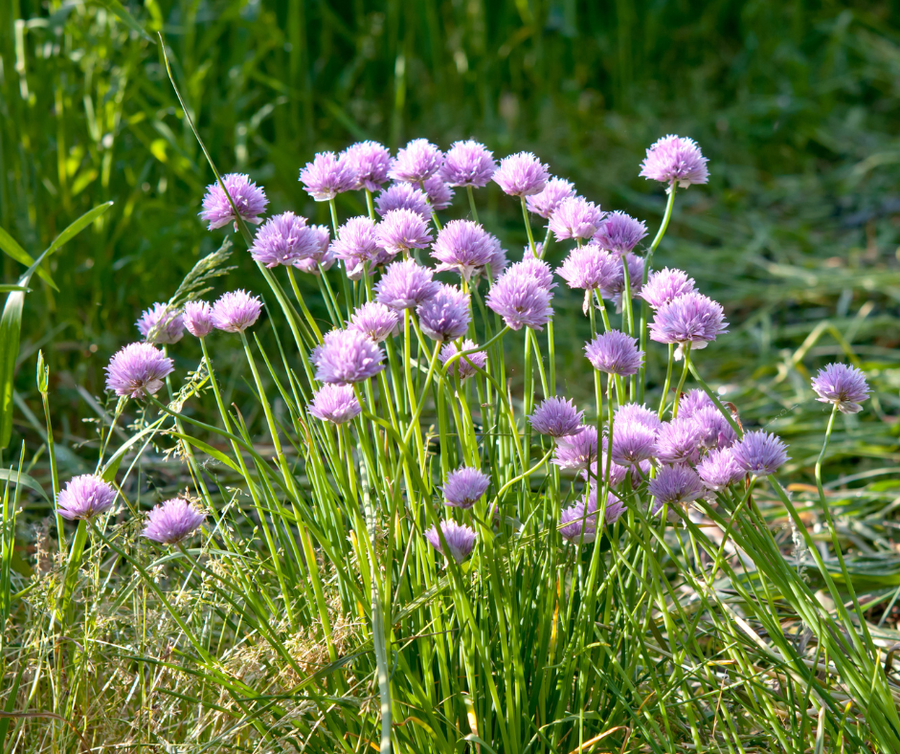
Allium is a pollinator favorite and can bring a pop of color to the garden
There are marvelous varieties of bulbs on the market. Allium is one of my favorites, with flowers ranging from six inches to five feet in lollipop forms of white, pink, and blue. These cousins of the edible onion make late-season flowers good for cutting or drying. Just do a quick internet search for fall-planted bulbs and be amazed!