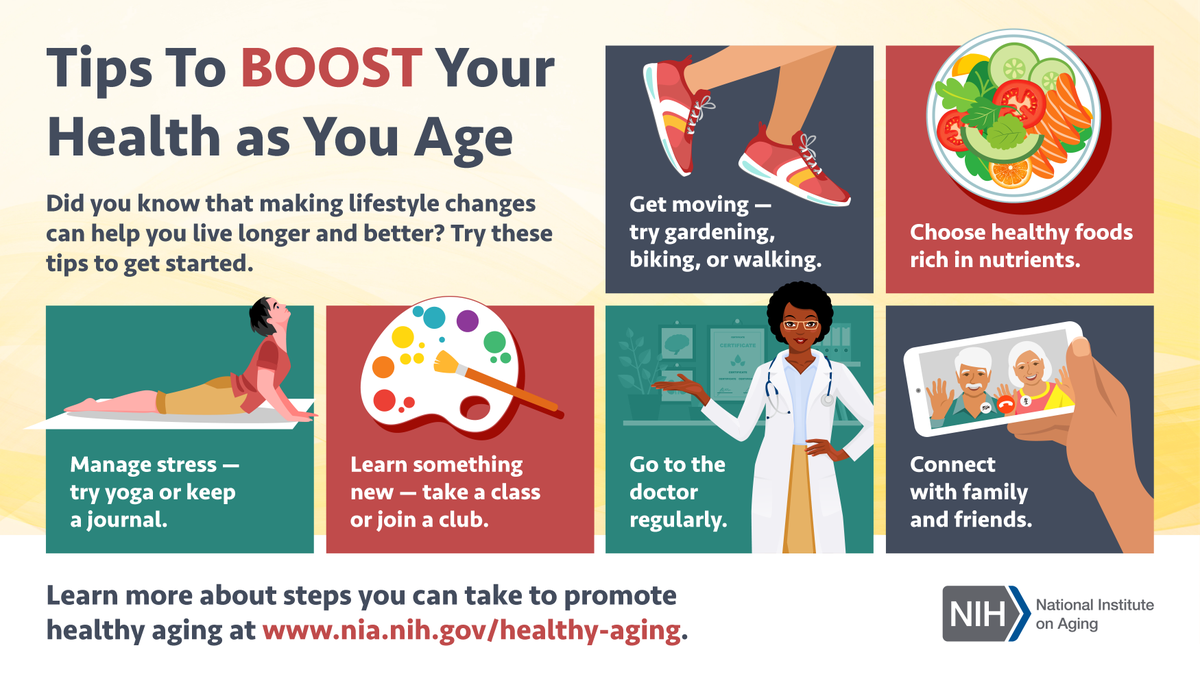
People over the age of 50 may need more of some vitamins and minerals than younger adults do. Your doctor or a dietitian can tell you whether you need to change your diet or take a vitamin or mineral supplement to get enough of these:
- Calcium: Calcium works with vitamin D to keep bones strong at all ages. Bone loss can lead to fractures in both older women and men. Calcium is found in milk and milk products, canned fish with soft bones, dark-green leafy vegetables like kale, and foods with calcium added, such as breakfast cereals.
- Vitamin D: Most people in the United States consume less than recommended amounts of Vitamin D. Foods that contain vitamin D are fortified milk and milk products and vitamin D-fortified cereals. Sunshine is important in converting cholesterol to Vitamin D in your body. If you don’t get adequate sun, as many avoid the sun or use sunscreen, you may not have adequate blood levels of the vitamin. Talk to your doctor about adding a Vitamin D supplement to your diet.
- Vitamin B6: This vitamin is needed to form red blood cells. It is found in potatoes, bananas, chicken breasts, and fortified cereals.
- Vitamin B12: This helps keep your red blood cells and nerves stay healthy. While older adults need just as much vitamin B12 as other adults, some have trouble absorbing the vitamin naturally found in food. If you have this problem, your doctor may recommend that you eat foods like fortified cereals with this vitamin added, or take a B12 supplement. Strict vegetarians and vegans are at greater risk of developing vitamin B12 deficiency because natural food sources of vitamin B12 are limited to animal foods.